Provider credentialing is a crucial process in the healthcare industry that can take anywhere from a few weeks to several months to complete. This timeframe can vary significantly based on factors such as the complexity of the provider’s background, the efficiency of the credentialing agency, and the specific requirements of the healthcare facility involved. Typically, the process involves verifying the provider’s education, training, experience, and any legal or disciplinary history. Additionally, ongoing changes in regulations and policies may add further complexity to the process.
How long does provider credentialing take?
The answer can significantly impact revenue, patient scheduling, and overall practice growth. A delayed provider credentialing timeline can prevent providers from seeing insured patients, submitting claims, and receiving reimbursements.
Whether you’re a physician, nurse practitioner, therapist, psychologist, physical therapist, or behavioral health provider, understanding the provider credentialing process is essential for successful revenue cycle management.
What Is Provider Credentialing?
Provider credentialing is the verification process used by insurance companies to confirm that healthcare providers meet professional and regulatory standards before joining insurance networks.
During provider credentialing, payers review:
- Professional licenses
- Education and training
- Board certifications
- Work history
- Malpractice insurance
- DEA registration
- NPI information
- Exclusion databases
Insurance credentialing helps ensure patients receive care from qualified healthcare professionals while protecting payers from risk.
Why Provider Credentialing Matters
Without proper provider credentialing and provider enrollment, healthcare providers cannot effectively bill insurance companies.
Delayed insurance credentialing can result in:
- Lost revenue
- Delayed patient appointments
- Claim rejections
- Cash flow disruptions
- Increased administrative workload
A well-managed provider credentialing timeline supports faster reimbursements and stronger revenue cycle management performance.
Provider Credentialing Timeline by Insurance Type
The average provider credentialing timeline varies depending on the insurance payer, provider specialty, and geographic location.
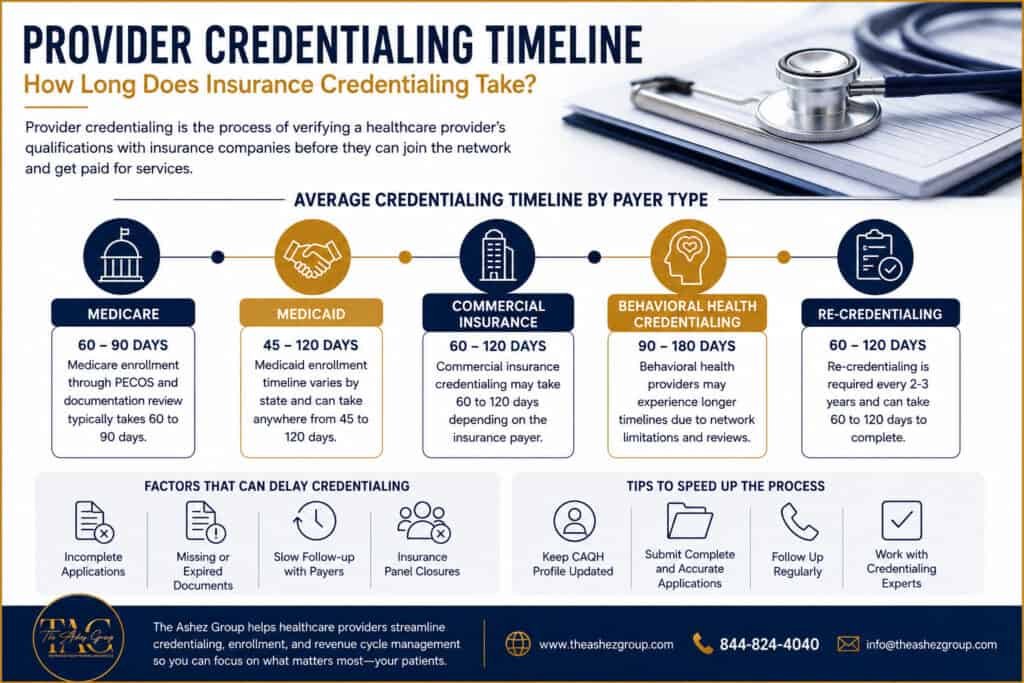
Most healthcare providers should expect the provider credentialing process to take between 60 and 120 days.
Some behavioral health credentialing applications may take even longer due to network capacity restrictions and additional payer reviews.
#provider credentialing process take #credentialing and payer enrollment #incomplete or expired caqh
Medicare Credentialing Timeline
Typical Timeline: 60–90 Days
Medicare credentialing is typically completed through PECOS and requires accurate provider enrollment documentation.
Common factors affecting Medicare credentialing include:
- Incomplete applications
- Missing documentation
- Delayed PECOS updates
- Incorrect NPI information
Submitting complete applications can significantly improve Medicare credentialing approval times.
Medicaid Enrollment Timeline
Typical Timeline: 45–120 Days
Medicaid enrollment timelines vary by state.
Some Medicaid programs process applications quickly, while others require additional verification steps.
Common Medicaid enrollment delays include:
- Missing ownership disclosures
- Incomplete applications
- Background verification requirements
- State-specific documentation requests
Healthcare providers should plan ahead when pursuing Medicaid enrollment.
Commercial Insurance Credentialing Timeline
Typical Timeline: 60–120 Days
Commercial insurance credentialing often takes the longest due to multiple verification stages.
Examples include:
- Aetna
- Cigna
- UnitedHealthcare
- Anthem
- CareFirst
- Humana
Commercial insurance credentialing typically requires detailed provider enrollment reviews and payer-specific requirements.
Provider Credentialing Timeline by Specialty
Behavioral Health Credentialing
Behavioral health credentialing often requires:
- Additional documentation
- Board certification verification
- Network availability reviews
Average timeline: 90–180 days
Primary Care Credentialing
Primary care providers generally experience:
- Higher payer demand
- Faster processing
Average timeline: 60–120 days
Physical Therapy Credentialing
Physical therapy practices often require:
- State license verification
- Group enrollment reviews
Average timeline: 60–120 days
Common Causes of Credentialing Delays
Many provider credentialing delays are preventable.
Incomplete Applications
One missing field can stop an entire provider enrollment application.
Common issues include:
- Missing signatures
- Incorrect dates
- Incomplete provider information
Expired Documents
Insurance credentialing applications frequently stall because:
- Licenses expire
- DEA registrations lapse
- Malpractice insurance expires
Missing Supporting Documentation
Payers commonly request:
- W-9 forms
- Curriculum vitae
- Malpractice certificates
- Board certifications
Missing documents can extend the provider credentialing timeline by weeks or months.
How CAQH Credentialing Impacts Approval Times
CAQH credentialing plays a major role in insurance credentialing success.
Most commercial insurance carriers pull provider information directly from CAQH.
An incomplete CAQH credentialing profile can create delays throughout the provider credentialing process.
Healthcare providers should:
- Update CAQH regularly
- Upload current documents
- Re-attest information every quarter
Maintaining an accurate CAQH credentialing profile often reduces provider enrollment delays.
Provider Credentialing Services
How to Speed Up the Provider Credentialing Process
Although providers cannot completely control payer processing times, they can reduce avoidable delays.
Prepare Documents Early
Create a credentialing packet containing:
- Medical license
- DEA certificate
- Board certification
- Malpractice insurance
- W-9
- NPI confirmation
Submit Complete Applications
Accurate provider enrollment applications reduce requests for corrections and additional documentation.
Monitor Application Status
Following up every two to three weeks helps identify problems before they significantly impact the provider credentialing timeline.
Maintain CAQH Accuracy
Regular CAQH credentialing maintenance prevents common insurance credentialing delays.
Maintaining an updated CAQH profile helps reduce insurance credentialing delays.
Why Provider Credentialing Is Critical for Revenue Cycle Management
Provider credentialing directly affects revenue cycle management because claims cannot be paid if providers are not properly enrolled with insurance carriers.
Delays in provider credentialing, provider enrollment, or insurance credentialing can result in:
- Delayed reimbursements
- Increased claim rejections
- Revenue loss
- Reduced patient access
Strong revenue cycle management begins with accurate provider credentialing and timely insurance enrollment.
Revenue Cycle Management Services
Benefits of Professional Credentialing Services
Many healthcare organizations choose professional credentialing services to streamline the provider credentialing process.
Professional credentialing services can help:
- Reduce application errors
- Track provider enrollment progress
- Manage CAQH credentialing
- Follow up with insurance carriers
- Accelerate approvals
For growing healthcare practices, credentialing services often save valuable time while improving approval rates.
Final Thoughts
Understanding the provider credentialing timeline is essential for healthcare providers who want to avoid reimbursement delays and maintain healthy cash flow.
Whether you’re completing Medicare credentialing, Medicaid enrollment, commercial insurance credentialing, or behavioral health credentialing, preparation and follow-up are critical.
A proactive approach to provider credentialing, CAQH credentialing, and provider enrollment helps healthcare organizations reduce delays, improve revenue cycle management, and start receiving payments faster.
The Ashez Group provides provider credentialing, insurance credentialing, provider enrollment, CAQH credentialing, and revenue cycle management services for healthcare providers nationwide.
Most provider credentialing applications take between 60 and 120 days, depending on the payer and specialty.
The average provider credentialing timeline ranges from 60–120 days, although behavioral health credentialing may take longer.
Yes. Maintaining an updated CAQH credentialing profile helps reduce delays and improve insurance credentialing efficiency.
Insurance credentialing requires extensive verification of licenses, education, work history, malpractice coverage, and professional qualifications.
Professional credentialing services often reduce application errors, improve follow-up, and help providers complete the provider enrollment process faster.
Need Help Navigating the Credentialing Process?
The Ashez Group helps healthcare providers with provider credentialing, insurance enrollment, CAQH management, behavioral health credentialing, and revenue cycle management across all 50 states.
Schedule a Free Credentialing Consultation
📞 844-824-4040
🌐 theashezgroup.com