Many healthcare practices lose thousands of dollars each year because claims are rejected before they are even processed by insurance companies. Understanding why medical claims get rejected on first submission can help providers improve clean claim rates, reduce denials, and strengthen financial performance.
What Is a Rejected Medical Claim?
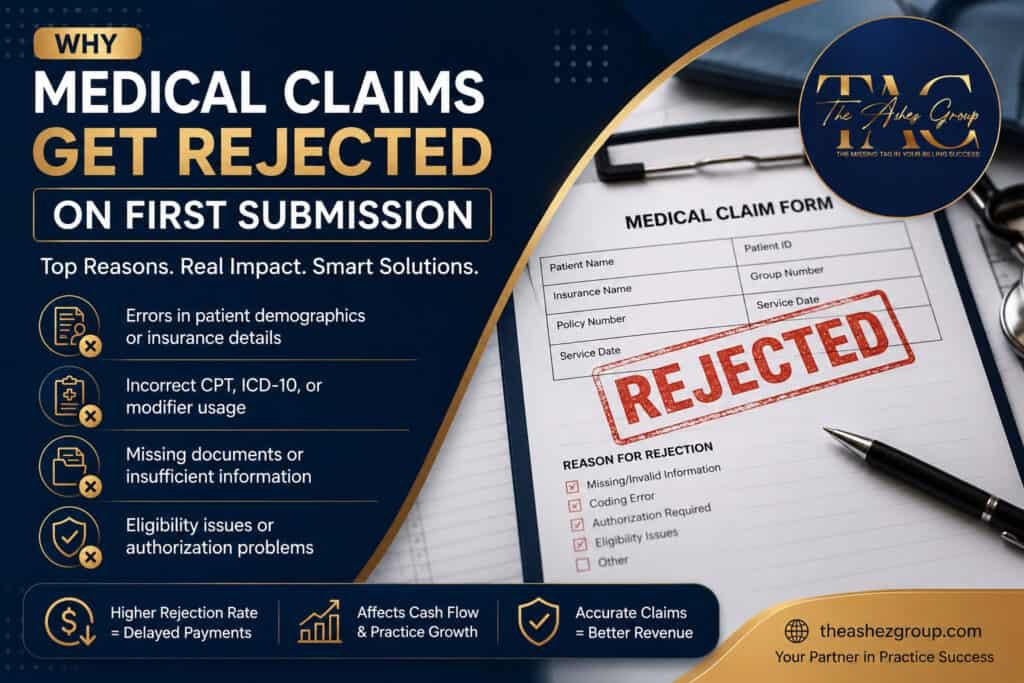
A rejected medical claim is a claim that insurance companies refuse to process because of errors or missing information. Unlike denied claims, rejected claims never enter the adjudication process and must be corrected before resubmission.
Rejected claims can significantly slow down reimbursements and increase accounts receivable workloads for healthcare practices.
Common Reasons Medical Claims Get Rejected
Understanding Why Medical Claims Get Rejected
1. Incorrect Patient Information
One of the most common reasons medical claims get rejected is inaccurate patient demographics.
Errors may include:
- Misspelled patient names
- Incorrect date of birth
- Invalid insurance ID numbers
- Wrong address information
- Missing subscriber details
Even a small typo can trigger claim rejection.
Healthcare providers should always verify patient information before claim submission.
2. Insurance Eligibility Issues
Insurance verification is critical before every appointment.
Claims are often rejected because:
- Coverage is inactive
- Services are not covered
- Policy terminated
- Incorrect payer selected
- Referral requirements not met
Eligibility verification helps reduce rejected claims and prevents unnecessary payment delays.
3. Missing or Incorrect CPT Codes
Medical coding errors are another major reason claims get rejected on first submission.
Common coding mistakes include:
- Invalid CPT codes
- Deleted codes
- Incorrect modifiers
- Diagnosis-code mismatches
- Unbundling errors
Accurate medical coding is essential for clean claim submission and compliance.
4. Incorrect ICD-10 Diagnosis Codes
Insurance companies require diagnosis codes that support medical necessity.
Problems occur when:
- ICD-10 codes are outdated
- Codes lack specificity
- Diagnoses do not support procedures billed
- Diagnosis sequencing is incorrect
Proper coding documentation helps improve reimbursement accuracy and reduces rejection rates.
5. Missing Prior Authorization
Many healthcare services require prior authorization before treatment.
Claims are frequently rejected because:
- Authorization was never obtained
- Authorization expired
- Incorrect authorization number used
- Approved services differ from billed services
Behavioral health billing, specialty care, imaging, and surgical procedures commonly face authorization-related claim rejections.
6. Duplicate Claim Submission
Submitting the same claim multiple times can trigger automatic rejection.
Duplicate claims often happen when:
- Staff resubmit too quickly
- Clearinghouse delays occur
- Claim status is not monitored properly
Practices should track claim statuses carefully before resubmitting.
7. Incorrect Provider Information
Provider enrollment and credentialing issues can also cause claim rejections.
Examples include:
- Invalid NPI number
- Taxonomy mismatch
- Outdated provider credentials
- Payer enrollment not completed
- Incorrect billing provider information
Provider credentialing and insurance enrollment should be reviewed regularly to avoid disruptions.
8. Filing Claims After Timely Filing Limits
Insurance companies enforce strict claim submission deadlines.
Late submissions are commonly rejected and may become non-payable.
Timely filing requirements vary by payer, making proper claim tracking essential for healthcare practices.
Financial Impact of Claim Rejections
Rejected medical claims create serious operational and financial challenges, including:
- Delayed reimbursements
- Increased accounts receivable
- Higher administrative costs
- Staff burnout
- Reduced cash flow
- Increased denial rates
Repeated claim rejections can significantly impact a healthcare practice’s long-term financial stability.
How to Reduce Medical Claim Rejections
Verify Insurance Before Every Visit
Confirm active coverage, benefits, authorizations, and eligibility before patient appointments.
Improve Front-End Data Collection
Ensure patient demographics and insurance information are accurate at check-in.
Use Accurate Medical Coding
Certified medical coders help reduce coding-related claim errors and compliance risks.
Monitor Claim Scrubbing Processes
Claim scrubbing software can identify errors before claims are submitted to payers.
Stay Updated on Payer Rules
Insurance billing requirements change frequently across Medicare, Medicaid, and commercial plans.
Work With an Experienced Medical Billing Company
Professional medical billing services help healthcare providers improve clean claim rates and reduce revenue loss.
Why Clean Claims Matter
A clean claim is a claim that passes through the insurance system without errors or delays.
Higher clean claim rates lead to:
- Faster reimbursements
- Better cash flow
- Reduced administrative burden
- Lower denial rates
- Improved patient satisfaction
Healthcare practices that focus on clean claim submission strengthen their overall revenue cycle management performance.
Final Thoughts
Medical claims get rejected for many reasons, but most issues are preventable with proper billing processes, insurance verification, coding accuracy, and revenue cycle management strategies.
Healthcare providers who proactively address billing errors can reduce claim rejections, improve reimbursements, and create a more financially stable practice.
The Ashez Group helps healthcare providers nationwide streamline medical billing operations, reduce claim rejections, improve denial management, and maximize reimbursements.
CMS Claims Processing
ResourcesAAPC Medical Coding
ResourcesAMA CPT Resources
Need Help Reducing Claim Rejections?
The Ashez Group offers:
- Medical Billing Services
- Insurance Verification
- Credentialing & Enrollment
- Denial Management
- Revenue Cycle Management
Visit: https://theashezgroup.com