Healthcare providers lose revenue every day because of preventable insurance errors. A patient may appear covered at check-in, but hidden benefit limitations, inactive coverage, prior authorization requirements, deductible balances, or incorrect payer information can quickly turn a clean claim into a denial.
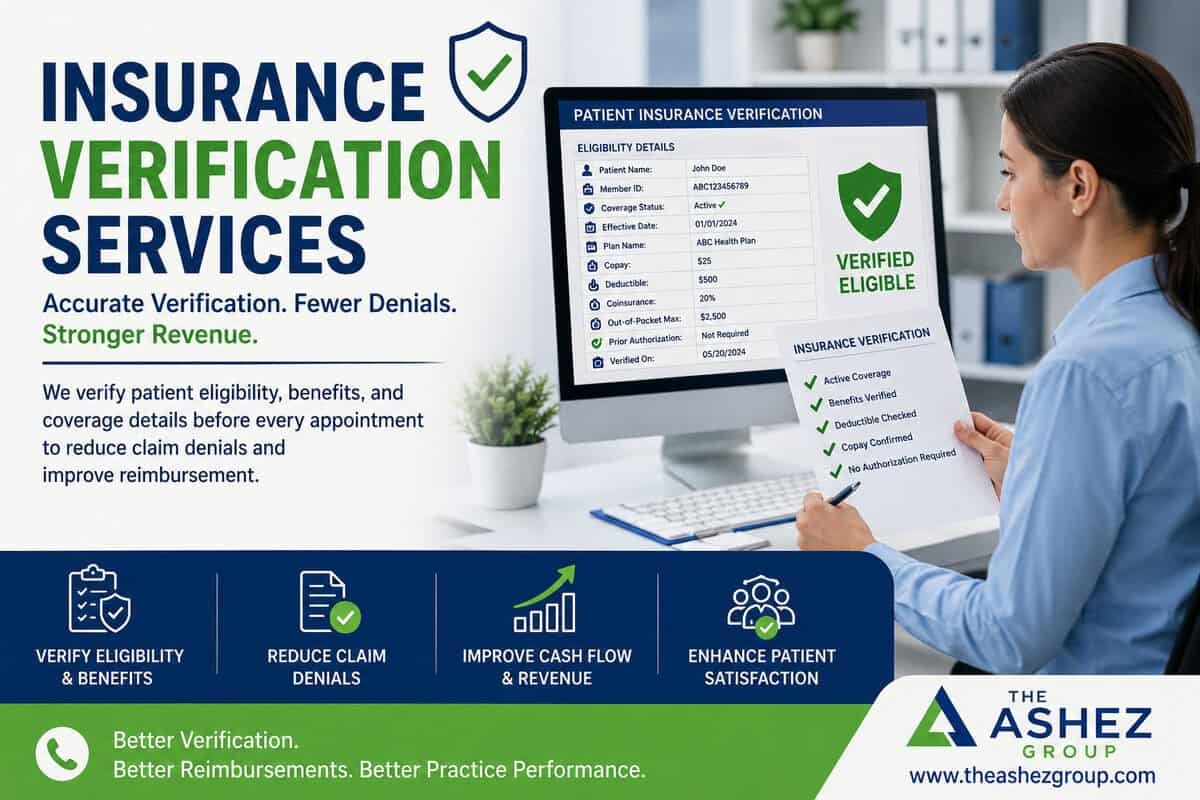
This is why Insurance Verification Services are critical before every appointment. For medical practices, behavioral health clinics, psychiatry providers, telehealth practices, and specialty offices, accurate eligibility checks help protect revenue, reduce claim denials, and improve the entire revenue cycle management process.
Understanding the Importance of Insurance Verification Services
Many practices only check whether a patient’s insurance is active. That is not enough.
A claim can still deny even when coverage appears active. Common issues include incorrect member ID numbers, out-of-network benefits, missing referrals, authorization requirements, service limitations, deductible balances, and coordination of benefits problems.
These mistakes create delayed reimbursements, higher accounts receivable, patient billing disputes, and unnecessary administrative work. For practices already managing heavy schedules and payer follow-ups, poor verification can damage cash flow quickly.
Why Insurance Verification Matters in Revenue Cycle Management
Insurance verification is one of the first steps in a strong revenue cycle management process. When eligibility and benefits are checked before the visit, the billing team has a better chance of submitting clean claims the first time.
Accurate verification helps improve:
- Clean claim rates
- Patient collections
- Reimbursement speed
- Denial prevention
- Prior authorization tracking
- Patient financial transparency
- Front-office efficiency
- Overall practice profitability
The goal is simple: catch problems before the appointment, not after the claim denies.
Common Verification Mistakes That Cause Claim Denials
One major mistake is verifying only active coverage. Practices should also confirm copays, deductibles, coinsurance, effective dates, referral rules, authorization requirements, and service limitations.
Another common issue is missing prior authorization. Many payers require authorization for behavioral health services, psychiatry visits, Spravato treatment, imaging, procedures, therapy sessions, and specialty care.
Incorrect patient demographics can also cause rejections. A wrong date of birth, misspelled name, outdated insurance card, or incorrect payer ID can delay payment.
Telehealth coverage is another area that must be checked carefully. Payer rules may vary based on service type, provider specialty, state, place of service, and modifier requirements.
Insurance Verification Checklist for Medical Practices
Before every appointment, healthcare providers should verify:
- Active insurance coverage
- Policy effective dates
- Member ID accuracy
- Patient demographics
- Copay amount
- Deductible balance
- Coinsurance responsibility
- Referral requirements
- Prior authorization status
- Telehealth coverage
- Behavioral health benefits
- Secondary insurance
- Coordination of benefits
- Service frequency limits
- Coverage exclusions
This checklist helps reduce avoidable denials and improves reimbursement performance.
Behavioral Health Insurance Verification Challenges
Behavioral health billing can be more complex than general medical billing. Mental health providers often deal with session limits, authorization requirements, telehealth restrictions, credentialing limitations, and medical necessity rules.
For therapists, psychiatrists, psychologists, PMHNPs, and behavioral health clinics, eligibility verification should include benefit details for CPT codes, session frequency, authorization status, and telehealth coverage.
A small missed detail can result in denied claims, delayed payments, or patient balance issues.
How Verification Improves Patient Experience
Patients do not like surprise bills. When insurance benefits are verified before the visit, practices can explain copays, deductibles, and estimated patient responsibility more clearly.
This improves trust, reduces billing complaints, and helps front-desk teams collect payments more effectively.
Strong patient communication also reduces cancellations, confusion, and payment delays.
#insurance verification services
Best Practices for Better Insurance Verification
Verify benefits 48 to 72 hours before the appointment when possible. This gives the office time to resolve eligibility problems before the patient arrives.
Use a standard verification workflow for every patient. Staff should document payer information, reference numbers, representative names, authorization details, and benefit notes.
Train front-office teams regularly. Front-end mistakes often become back-end billing problems.
Use real-time eligibility tools when available, but do not rely only on automated responses. Some services require deeper payer confirmation.
Trusted External Resources
Healthcare billing teams can review payer and billing guidance through trusted resources such as CMS, AAPC, and HHS.
Recommended outbound links:
AAPC:
https://www.aapc.com
HHS HIPAA:
https://www.hhs.gov/hipaa/index.html
Why Outsourcing Verification Can Help
Many practices outsource eligibility checks because the process is time-consuming and detail-heavy. A professional medical billing company can help verify benefits, identify authorization requirements, reduce claim errors, and support stronger revenue cycle performance.
Outsourcing can be especially helpful for small practices, behavioral health clinics, specialty offices, and providers with limited administrative staff.
Final Thoughts
Insurance verification Services is not just an administrative task. It is a financial protection step for every healthcare practice.
When verification is done correctly before every appointment, providers can reduce denials, improve cash flow, strengthen patient communication, and protect revenue.
#insurance eligibility verification services #insurance eligibility and benefits verification
#insurance verification services companies #eligibility and benefits verification companies
#insurance verification services #realtime insurance eligibility verification
#health insurance eligibility verification #benefits verification companies in usa
InsuranceVerification #MedicalBilling #RevenueCycleManagement #HealthcareBilling #ClaimDenials #EligibilityVerification #BehavioralHealthBilling #MedicalBillingServices #TheAshezGroup
How The Ashez Group Helps
The Ashez Group helps healthcare providers nationwide with medical billing, insurance verification, eligibility checks, prior authorization support, denial management, credentialing, and complete revenue cycle management.
Our team helps practices reduce claim denials, improve reimbursement timelines, and strengthen overall billing performance.
Email: info@theashezgroup.com
Website: https://theashezgroup.com